
Board of Directors
-

David Sanford
Founder, CEO, and Board Member
Hypothesis FundDavid founded the Hypothesis Fund in 2022 to support breakthrough research that increases our adaptability against systemic risks to the health of humans and the planet.
Prior to launching the Hypothesis Fund, David was Chief of Staff in the Office of Reid Hoffman, responsible for managing a broad portfolio of philanthropic, civic, business, and intellectual initiatives.
He has served as a Board Observer at Change.org and on numerous nonprofit and company advisory boards.
David has pioneered community building both in the digital and physical realms. As an early employee at LinkedIn he created one of the first mechanisms for supporting philanthropic causes via social networks: LinkedIn for Good. After building early communities on the Web, David took this practice back to the physical world, opening and operating a restaurant designed to cultivate community through shared meals.
Earlier in his career, as a research assistant in the Orthopaedic Sciences Laboratory at the University of Washington, David developed a novel platform for studying bone loss, which remains a core component of the lab’s research now two decades later.
David earned his B.A. degree with Honors from Stanford University.
-

Cecilia Conrad, Ph.D.
CEO, Lever for Change;
Managing Director, John D. and Catherine T. MacArthur FoundationLever for Change is a new nonprofit affiliate of the MacArthur Foundation whose mission is to unlock philanthropic capital and accelerate solutions to the world’s biggest social challenges. In addition to her role at Lever for Change, Dr. Conrad oversees the MacArthur Fellows program and MacArthur’s 100&Change, the Foundation’s competition for a single $100 million grant to help solve a critical problem of our time.
Before joining the Foundation in January 2013, Conrad had a distinguished career as both a professor and an administrator at Pomona College in Claremont, CA. She held the Stedman Sumner Chair in Economics and is currently an emerita professor of economics. She served as Associate Dean of the College (2004-2007), as Vice President for Academic Affairs and Dean of the College (2009-2012), and as Acting President (Fall 2012). From 2007-2009, she was interim Vice President and Dean of the Faculty at Scripps College.
Before joining the faculty at Pomona College, Conrad served on the faculties of Barnard College and Duke University. She was also an economist at the Federal Trade Commission and a visiting scholar at The Joint Center for Political and Economic Studies.
Dr. Conrad is a member of the Board of Trustees of Bryn Mawr College, the Poetry Foundation, the National Academy of Social Insurance, IES, and the Sylvia Bozeman and Rhonda Hughes EDGE Foundation. She is a Trustee Emerita of Muhlenberg College.
She has received numerous recognitions for her scholarship and leadership, including California’s Carnegie Professor of the Year (2002), National Urban League’s Women of Power Award (2008), and the National Economic Association’s Samuel Z. Westerfield Award (2018). She has honorary doctorates from Claremont Graduate University and the University of Massachusetts Dartmouth. Dr. Conrad received her B.A. degree from Wellesley College and her Ph.D. in economics from Stanford University.
-

Shirley Tilghman, Ph.D.
President Emerita and Professor of Molecular Biology and Public Affairs, Princeton University
Shirley M. Tilghman was elected Princeton University’s 19th president on May 5, 2001 after serving on the Princeton faculty for 15 years. Upon the completion of her term in June of 2013, she returned to the faculty.
During her scientific career as a mammalian developmental geneticist, she studied the way in which genes are organized in the genome and regulated during early development, and was one of the founding members of the National Advisory Council of the Human Genome Project for the National Institutes of Health.
Dr. Tilghman is an Officer of the Order of Canada, the recipient of a Lifetime Achievement Award from the Society for Developmental Biology, the Genetics Society of America Medal, and the L’Oreal-UNESCO Award for Women in Science. She is a member of the American Philosophical Society, the National Academy of Sciences, the National Academy of Medicine and The Royal Society of London. She serves on the boards of the Simons Foundation, the Broad Institute of MIT and Harvard, the Institute for Advanced Study, and the American Academy of Arts and Sciences.
-

Jay Shendure, M.D., Ph.D.
Scientific Director of the Seattle Hub for Synthetic Biology, Professor of Genome Sciences, University of Washington School of Medicine
Jay Shendure is an Investigator of the Howard Hughes Medical Institute, a Professor of Genome Sciences at the University of Washington, and Scientific Director of the Seattle Hub for Synthetic Biology (Allen-CZI-UW), the Allen Discovery Center for Cell Lineage Tracing, and the Brotman Baty Institute for Precision Medicine.
His 2005 doctoral thesis with George Church included one of the first successful reductions to practice of next-generation DNA sequencing.
Dr. Shendure's research group in Seattle pioneered exome sequencing and its earliest applications to gene discovery for Mendelian disorders and autism; cell-free DNA diagnostics for cancer and reproductive medicine; massively parallel reporter assays, saturation genome editing; combinatorial single cell molecular technologies; and genome editing-based molecular recording technologies.
Dr. Shendure is the recipient of the Curt Stern Award from the American Society of Human Genetics (2012), the Richard Lounsbery Award from the National Academy of Sciences (2019) and the Mendel Award from the European Society of Human Genetics (2022). He is an elected member of the American Association for the Advancement of Science and the National Academy of Sciences. He serves or previously served as an advisor to the NIH Director, the US Precision Medicine Initiative, National Human Genome Research Institute, Chan Zuckerberg Initiative, Gladstone Institute, New York Genome Center and Allen Institute. He received his MD and PhD degrees from Harvard Medical School in 2007.
-
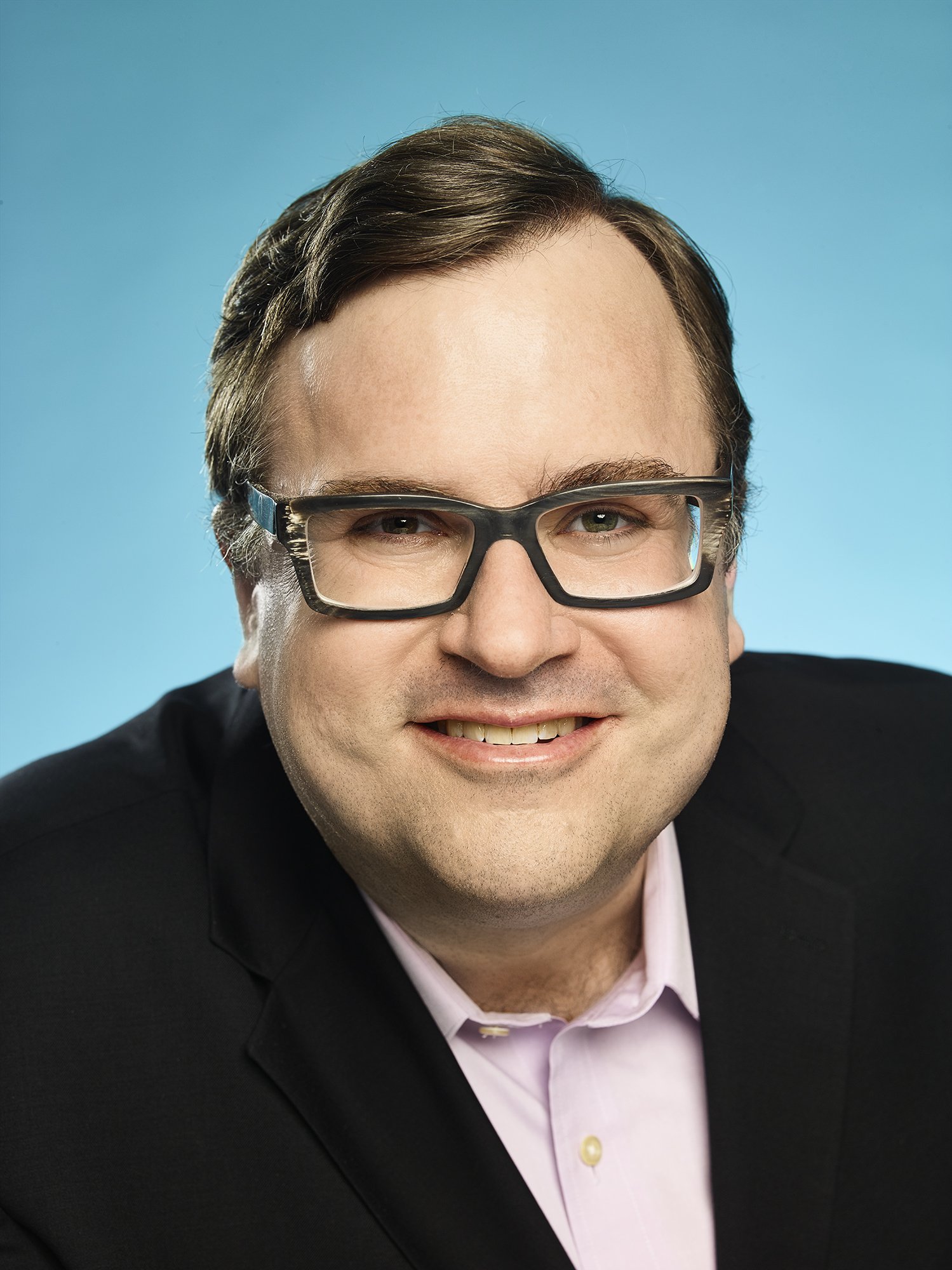
Reid Hoffman
Co-Founder of LinkedIn and Inflection AI;
Partner at GreylockAn accomplished entrepreneur, executive, and investor, Reid Hoffman has played an integral role in building many of today’s leading consumer technology businesses. In 2003 he co-founded LinkedIn, the world’s largest professional networking service. In 2009 he joined Greylock. In 2022, he co-founded Inflection AI. He currently serves on the boards of Aurora, Coda, Convoy, Entrepreneur First, Joby, Microsoft, Nauto, Neeva, and a few early stage companies still in stealth. In addition to the Hypothesis Fund, he serves on a number of not-for-profit boards, including Kiva, Endeavor, CZ Biohub, New America, Berggruen Institute, Opportunity@Work, the Stanford Institute for Human-Centered AI, and the MacArthur Foundation’s Lever for Change. He is the host of Masters of Scale, an original podcast series and the first American media program to commit to a 50-50 gender balance for featured guests. He is the co-author of four best-selling books: The Start-Up of You, The Alliance, Blitzscaling, and Masters of Scale. He is an Aspen Institute Crown Fellow, a Marshall Scholar at Oxford, and a graduate of Stanford University.
-

Board Member Emeritus, John O. Dabiri, Ph.D.
Scientific Advisory Board
-
Carolyn Bertozzi is the Anne T. and Robert M. Bass Professor of Chemistry and Professor of Chemical & Systems Biology and Radiology (by courtesy) at Stanford University, and an Investigator of the Howard Hughes Medical Institute. She completed her undergraduate degree in Chemistry from Harvard University in 1988 and her Ph.D. in Chemistry from UC Berkeley in 1993. After completing postdoctoral work at UCSF in the field of cellular immunology, she joined the UC Berkeley faculty in 1996. In June 2015, she joined the faculty at Stanford University coincident with the launch of Stanford's ChEM-H institute.
Prof. Bertozzi's research interests span the disciplines of chemistry and biology with an emphasis on studies of cell surface glycosylation pertinent to disease states. Her lab focuses on profiling changes in cell surface glycosylation associated with cancer, inflammation and bacterial infection, and exploiting this information for development of diagnostic and therapeutic approaches, most recently in the area of immuno-oncology. She has been recognized with many honors and awards for her research accomplishments. She is an elected member of the Institute of Medicine, National Academy of Sciences, and American Academy of Arts and Sciences. She has been awarded the Lemelson-MIT Prize, the Heinrich Wieland Prize, and a MacArthur Foundation Fellowship, among many others.
-
Dr. Joseph DeRisi is the President of the Chan Zuckerberg Biohub and a Professor in the Department of Biochemistry and Biophysics at UCSF. He employs an interdisciplinary approach combining genomics, bioinformatics, biochemistry, and bioengineering to study parasitic and viral infectious diseases in a wide range of organisms, for the purpose of discovering and studying novel or unrecognized biothreats. Early work in his lab contributed to the identification of the SARS coronavirus in 2003. In a parallel effort, Dr. DeRisi studies P. falciparum, the causative agent of the most deadly form of human malaria, in order to develop faster, better therapeutic options. Dr. DeRisi was one of the early pioneers of DNA microarray technology and whole genome expression profiling and is nationally recognized for his efforts to make this technology accessible and freely available.
He received a B.A. in Biochemistry and Molecular Biology (1992) from the University of California, Santa Cruz, and a Ph.D. in Biochemistry (1999) from Stanford University prior to joining the UCSF faculty as a Sandler Fellow in 1999. Dr. DeRisi was a Howard Hughes Medical Investigator from 2006-2016, which he left to take on the role of Co-President of the Chan Zuckerberg Biohub, a non-profit medical research organization affiliated with UCSF, UC Berkeley, and Stanford University. Dr. DeRisi is a member of the National Academy of Science, the National Academy of Medicine, and the National Academy of Arts and Sciences. Dr. DeRisi is continuing to pursue efforts toward data-driven diagnostics for infectious disease, and recently, autoimmune disorders as well.
More recently, through his role as Co-President of the Chan Zuckerberg Biohub, he has redirected his efforts to providing large-scale, rapid turnaround clinical COVID19 testing through a UCSF/Biohub collaboration called the “CLIAHUB.” As of November, the CLIAHUB has returned over 155,000 clinical results to Californians, in addition to thousands of full length SARS-CoV-2 genomes for genomic epidemiological studies, including studies of underserved and vulnerable populations. Starting in 2022, he has accepted the position as sole President of the Chan Zuckerberg Biohub.
-
Dr. Margaret McFall-Ngai is a Staff Researcher at Carnegie Institute for Science in the Division of Biosphere Sciences and Engineering, and a Faculty Associate in the Division of Biology and Biological Engineering at California Institute of Technology. She has held tenured positions at University of Southern California (1989-1996), University of Hawaii (1996-2004), and University of Wisconsin-Madison (2004-2016), where she served as Chair of the Division of Biology (2013-2016). Before joining Carnegie in 2022, Dr. McFall-Ngai was a professor at the University of Hawaii-Manoa and served as the Director of the Pacific Biosciences Research Center from 2015 to October 2020. She has instituted the C-MAIKI center for microbiome research at UH-M and was the PI for the WM Keck Foundation’s environmental microbiome observatory. Her research laboratory studies two areas: (i) the role of beneficial bacteria in health using the squid-vibrio model; and (ii) the biochemical and molecular ‘design’ of tissues that interact with light. In addition, she has been heavily involved in promoting microbiology as the cornerstone of the field of biology and co-organizes and runs an advanced summer course on microbial symbioses as a visiting professor at the Gulbenkian Institute in Lisbon, Portugal. Dr. McFall-Ngai was a Guggenheim Fellow (2010), Moore Scholar at California Institute of Technology (2011-2013), and a fellow at the Wissenschaftskolleg in Berlin (2024).
She currently is a member of the American Academy of Microbiology (2002), the American Academy of Arts and Sciences (2011), and the National Academy of Sciences (2014). She was awarded Doctor Honoris Causa degrees from Ecole Polytechnique Federale de Lausanne, Switzerland (2015), the Université Claude Bernard, Lyon 1, France (2023) and the University of Kiel, Germany (2024). She became a Howard Hughes Medical Institute Professor in 2017 and was ARCS Foundation Hawaii Chapter Scientist of the Year in 2019. She chaired the advisory committees for the Canadian Institute for Advanced Research (CIFAR) program on Humans and the Microbiome (2014-2021) and is currently the chair for the advisory committee for the Max Planck Institute for Biology in Tuebingen (2024-2027).
Before joining Carnegie in 2022, Dr. McFall-Ngai was a professor at the University of Hawaii-Manoa and served as the Director of the Pacific Biosciences Research Center from 2015 to October 2020. She has instituted the C-MAIKI center for microbiome research at UH-M, and is PI of the WM Keck Foundation’s environmental microbiome observatory. Her research laboratory studies two areas: (i) the role of beneficial bacteria in health using the squid-vibrio model; and (ii) the biochemical and molecular ‘design’ of tissues that interact with light. In addition, she has been heavily involved in promoting microbiology as the cornerstone of the field of biology, and co-organizes and runs an advanced summer course on microbial symbioses as a visiting professor at the Gulbenkian Institute in Lisbon, Portugal.
Dr. McFall-Ngai was (2011-2013) a Moore Scholar at California Institute of Technology, and a Guggenheim fellow, and she currently is a member of the American Academy of Microbiology (2002), the American Academy of Arts and Sciences (2011), and the National Academy of Sciences (2014). She received a Doctor Honoris Causa, Ecole Polytechnique Federale de Lausanne, Switzerland in 2015. She became a Howard Hughes Medical Institute Professor in 2017, and was the ARCS Foundation Scientist of the Year in 2019. She currently chairs serves on the advisory committee for the Canadian Institute for Advanced Research (CIFAR’s) program on Humans and the Microbiome, for the German Research Foundation Metaorganisms Consortium, and the Max Planck Institute for Biology in Tuebingen.
-
Dr. Claudia Benitez-Nelson is a Senior Associate Dean in the College of Arts & Sciences and Carolina Distinguished Professor at the University of South Carolina. Her research focuses on the biogeochemical cycling of nutrients and carbon and how these elements are influenced by both natural and anthropogenic processes. Over the past two decades, she has authored or co-authored more than 130 articles and is continuously supported by substantial, multi-year research and education grants.
Dr. Benitez-Nelson’s many research honors include the Early Career Award in Oceanography from AGU and Fulbright and Marie Curie Fellowships. She is an AAAS Fellow and an ASLO Sustaining Fellow. Dr. Benitez-Nelson is also highly regarded as a teacher and mentor. She received the University of South Carolina’s Distinguished Professor of the Year Award, SEC Faculty Achievement Award, and Outstanding Faculty Advisor of the Year as well as the AGU Sulzman Award for Excellence in Education and Mentoring and the Oceanography Society’s Mentoring Award for Excellence and/or Innovation in Mentoring the Next Generation of Ocean Scientists. She is the current Chair of the National Academy of Science’s Ocean Studies Board.
-
Dr. Larry Corey is an internationally renowned expert in virology, immunology and vaccine development, and the former president and director of Fred Hutch. His research focuses on herpes viruses, HIV, the novel coronavirus and other viral infections, including those associated with cancer. He is principal investigator of the HIV Vaccine Trials Network, or HVTN, which conducts studies of HIV vaccines at over 80 clinical trial sites in 16 countries on five continents. Under his leadership, the HVTN has become the model for global, collaborative research. Dr. Corey is also the principal investigator of the Fred Hutch-based operations center of the COVID-19 Prevention Network, or CoVPN, and co-leads the network’s vaccine testing pipeline.
He is a member of the Institute of Medicine and the Board of Scientific Counselors-Basic Sciences of the National Cancer Institute, a fellow of the Infectious Diseases Society of America, and a member of the American Epidemiological Society and the Association of American Physicians. He is the recipient of the Pan American Society Clinical Virology Award, the American Society for STD Research Parran Award, the University of Michigan Medical School Distinguished Alumnus Award and the Infectious Diseases Society of America Ender’s Award. He was elected Member, American Academy of Arts and Sciences in April 2012 and the recipient of the 2012 Cubist-ICAAC Award, American Society for Microbiology. He also sits on the scientific advisory boards of Immune Design and Vir Biotechnology.
-
Victoria's multidisciplinary research program spans the interface between environmental microbiology, geochemistry, and geology. Through the integrated application of environmental 'omics approaches, stable isotope analysis, and imaging, her group is characterizing the interspecies interactions and ecological physiology of archaea, bacteria, and viruses linked to the cycling of methane, sulfur, nitrogen, and metals in ocean sediments and extreme environments.
Victoria Orphan received a B.A. (1994) and Ph.D. (2001) from the University of California at Santa Barbara and was a National Research Council Associate (2002–2004) at the NASA Ames Research Center. In 2004, she joined the faculty of the California Institute of Technology, where she is currently the James Irvine Professor of Environmental Science and Geobiology in the Division of Geological and Planetary Sciences. Orphan is also, since 2008, an adjunct scientist with the Monterey Bay Aquarium Research Institute, and her scientific articles have appeared in Science, Nature, Environmental Microbiology, and the Proceedings of the National Academy of Science, among many others.
-
Drew Endy is the Martin Family University Faculty Fellow in Undergraduate Education at Stanford University where he is also a Science & Senior Fellow (courtesy) of the Hoover Institution, Senior Fellow (courtesy) of the Freeman Spogli Institute, and faculty co-director of degree programs for the Hasso Plattner Institute of Design (the d.school). He founded Hoover’s Bio-Strategy & Leadership effort to help leaders understand biology as a strategic domain and act accordingly (victory.stanford.edu). Endy previously helped launch new undergraduate majors in bioengineering at both MIT and Stanford and the International Genetically Engineered Machine (iGEM) competition, a global genetic engineering olympics engaging ~5,000 students annually. Endy’s research focuses on molecular to cellular-scale composition in synthetic biological systems. His teams have pioneered genome refactoring, rewritable DNA data storage, amplifying genetic logic, functional abstraction and composition frameworks for genetic parts and devices, gene expression standards and reference materials, fail-safe genetic codes, and colloidal-hydrodynamic modeling of cytoplasm. His ongoing research focuses on bottom-up synthetic cell engineering. In 2002 Endy chaired DARPA's synthetic biology study. In 2012 Endy helped organize the joint US NASEM, UK RS/RAE, and PRC CAS/CAE discussions on synthetic biology, leading the US delegation. In 2013 President Obama recognized Endy for his work on open source biotechnology. In 2025 Endy testified extensively before the US-China Economic & Security Review Commission and the US House Committee on Space, Science, and Technology.
Endy has served on the US National Science Advisory Board for Biosecurity, the US NASEM Committee on Science, Technology, & Law, the International Union for Conservation of Nature’s Synthetic Biology Task Force, the Pentagon’s Defense Innovation Board (briefly), the OECD’s Synthetic Biology Taskforce, and the Defense Science Board’s Emerging Biotechnology & National Security Taskforce. He continues to serve on the WHO’s Advisory Committee on Variola Virus Research, the US NASEM Standing Committee on Emerging Infectious Diseases and 21st Century Health Threats, and as director for the iGEM, BioBrick, and BioBuilder foundations — charities advancing biotechnology and biotechnology education. He recently co-founded BIOTIC as a new charity advancing emerging biotechnologies on a multilateral basis. Endy earned a BS and MS in civil and environmental engineering from Lehigh University and PhD in biotechnology and biochemical engineering from Dartmouth College. He holds an honorary doctorate from the Technische Universiteit Delft and is a fellow of the American Institute for Medical and Biological Engineering. Esquire magazine named Endy one of the seventy-five most influential people of the twenty-first century.
Operations
-

Pajau Vangay, Ph.D.
Sr. Director, Scientific Network
Pajau Vangay received her Ph.D. in Computational Biology from the University of Minnesota, where she worked in the research lab of Dr. Dan Knights. Her graduate research focused on the impact of migration on the human gut microbiome and obesity development in refugee communities in the US. She also has a M.S. degree in Food Microbiology from Cornell University, and a B.S. in Computer Science from the Colorado School of Mines.
After completing her Ph.D., she joined the California Council on Science and Technology Science and Technology Policy Fellowship program as a policy committee consultant and legislative aide in the California Legislature. Prior to her current role at the Hypothesis Fund, she was based at Lawrence Berkeley National Laboratory, where she was the Scientific Community Manager for the National Microbiome Data Collaborative and partnered with scientific communities to champion open science and data stewardship practices. As Sr. Director, Scientific Network at the Hypothesis Fund, she supports and empowers our diverse network of scientists in identifying and pursuing high-risk, high-reward projects.
-
David Sanford
Founder & CEO
David founded the Hypothesis Fund in 2022 to support breakthrough research that increases our adaptability against systemic risks to the health of humans and the planet.
Prior to launching the Hypothesis Fund, David was Chief of Staff in the Office of Reid Hoffman, responsible for managing a broad portfolio of philanthropic, civic, business, and intellectual initiatives.
He has served as a Board Observer at Change.org and on numerous nonprofit and company advisory boards.
David has pioneered community building both in the digital and physical realms. As an early employee at LinkedIn he created one of the first mechanisms for supporting philanthropic causes via social networks: LinkedIn for Good. After building early communities on the Web, David took this practice back to the physical world, opening and operating a restaurant designed to cultivate community through shared meals.
Earlier in his career, as a research assistant in the Orthopaedic Sciences Laboratory at the University of Washington, David developed a novel platform for studying bone loss, which remains a core component of the lab’s research now two decades later.
David earned his B.A. degree with Honors from Stanford University.